Happy Days

Watching Wimbledon this week and anticipating the Olympics, I was struck by what a lucky little so-and-so I have been. I was trying to imagine what my “bucket” list might have looked like in my late teens/ early twenties and I reckon it would have looked a bit like this

  • A trip to Disney World
  • Watch tennis at Wimbledon
  • Meet my soul mate
  • See the Northern Lights
  • Dance at the Tower Ballroom
  • Have a successful career
  • Go to the Olympics
  • See New England in the fall

I don’t think, at that age, the one thing left on my bucket list – travel throughout Ireland (particularly Galway, Cavan and Tipperary) would have made the list; I probably didn’t understand my cultural and ancestral ties at that age.

Fair to say I have smashed the rest of it, the Northern Lights were dropped in my lap, a gift from nature that wasn’t lost on me. I have travelled North America extensively and enjoyed every second, Yosemite (three times), Disney World and Orlando (seven times) and the Canadian rockies (twice); would be my favourites, but I also loved Zion, New York, Boston, Washington DC, San Francisco, Washington, Vancouver and Shenandoah. I wish I had been brave enough to explore South America and the Indian Continent – I feel the colour and vibrancy of those places would have awakened my senses and lust for adventure in ways that could have changed my life; but my desire for comfort and safety has always been too strong. Reading has been my travel placebo. I’ve been to many a cup final at Wembley, have spectated at Wimbledon several times, was one of the many who experienced Super Saturday first hand, I danced at the Tower Ballroom with my soul mate and I think my career was reasonable.

I have had an incredible life, probably not by anyone else’s standards but, in my eyes, I have achieved so much. My life has been full of love – given and received. I know that I have saved lives through my compassion and understanding – what a gift that is. And I have influenced other lives of course, mostly positively, and certainly my intent has always been one of kindness. I have worked hard and had much enjoyment. There have been challenges, grief – as it is for most people my age – has been my companion many times in the last twenty years. My health has been, for the most part, excellent and I am full of admiration for my body’s ability to do all it does. My most recent challenge came on the 4th March this year when I heard, for the second time, those fateful words “sorry, it’s cancer”. I was alone, I was shocked, I was afraid. My overwhelming thought was I am not ready to die. The system kicked into action quickly and efficiently – staging CT, bloods, scans, further histology and I was to come back on 21st March for a fuller diagnosis and to agree a plan.

On that day I wrote in my journal “scared, hopeful, numb”. That about covers it!

The results were as good as they could be in the circumstances, and a plan was put in place for surgery the following Wednesday, yet again the system ramped up and I was pre-op’d and ready. On the Saturday before my operation, I decided to do the 100 Happy Days challenge. I am so glad I did. Firstly, to notice just how quickly 100 days passes; and perhaps more importantly to gain some evidence about what exactly makes me happy. The first thing I need to point out is that there are more happy things than there are days – because it wasn’t `the happiest thing’ but all that had made me happy that day. When I looked back this week to analyse the results, I was pleased to see that most of the things that make me happy represent the cornerstones of good mental health.

Thirty-eight times in the 100 days I noted some aspect of “noticing nature”, from the Northern Lights to a pretty flower, and there is such resonance here with my day to day. I am surprised it wasn’t 900/100 as that’s what my life feels like.

My beautiful pup Zahra, with all her challenges, was the next highest scoring; followed closely by friends and family. Love, as I have already said, and I am lucky to have the best people (and pup) in my corner. I appreciate every one of my relationships.

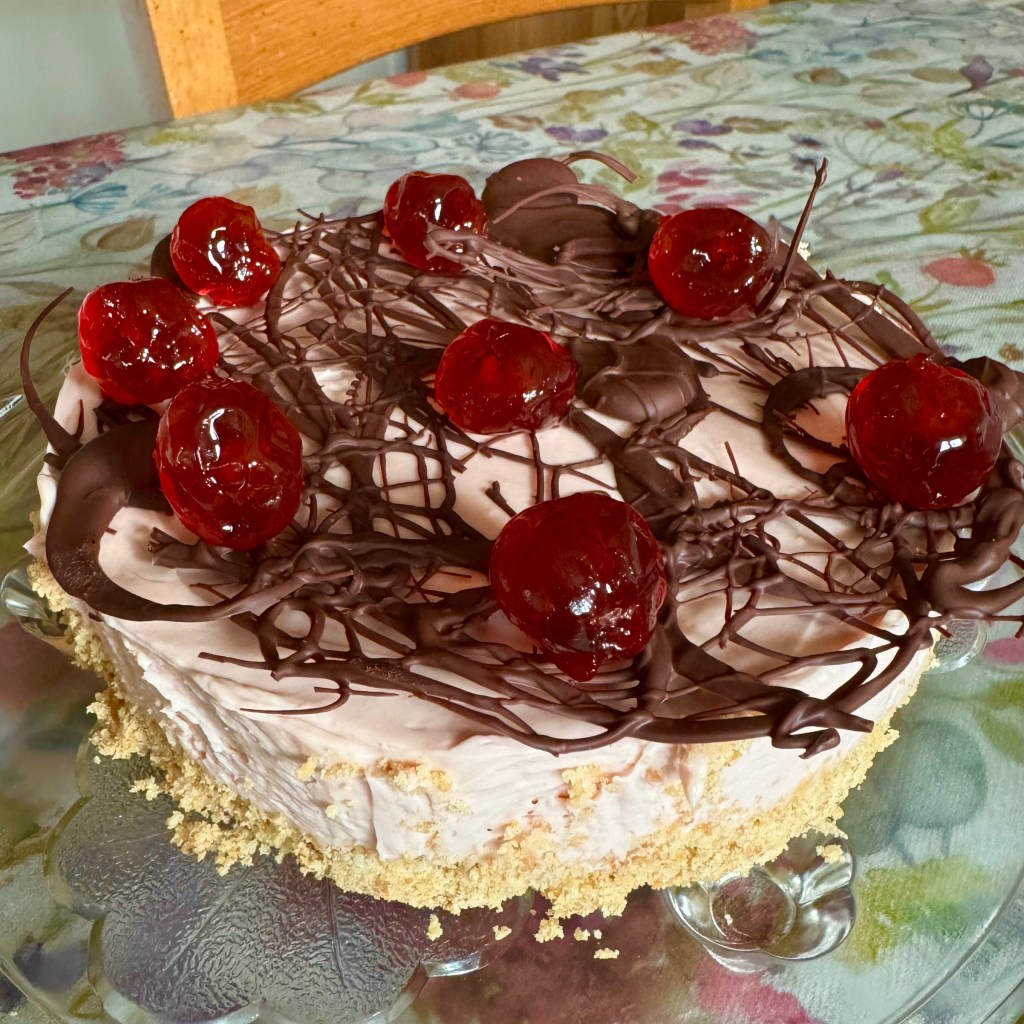
Next came food and more specifically cake, and anyone who knows me knows this to be true! I could do with cutting down a bit, but it’s never lost on me that nourishing myself is a great privilege. Enjoying tastes and textures; and using food to express my love for others is, and always will be, a huge and healthy part of my life.
The next highest scoring happy factor was family history. I have been researching my family history for more than three decades and I love so much about this. I love the actual research, playing detective, analysing facts, seeing patterns – holding everything loosely, and then homing in and proving a piece of evidence. It has taught me so much about life and how to analyse information, also about being non-judgmental and keeping my heart and mind open. Then there are the stories, often not my own blood line but some delightful rabbit holes that I have tumbled down along the way – like the story of Catherine Ratcliffe-Duncan, a pit brow lass from Billinge; and Mary Ellen Foster, who left rural Rainford to enhance her nurse training and ended up being one of the first registered physiotherapists. But it’s the people I have met along the way who are the greatest treasure, not just the many cousins I have connected with but the genealogists who are so kind and generous with their time and expertise.

The next part of my analysis shows several things with equal weighting: art, reading, naps, self-care and self-improvement. Wonderful! House work and home improvements snuck onto the list – I don’t think we should live for “things” or keeping those things clean and tidy; but nor do I need to justify myself, I am working on being happy with “being” and I don’t see these features as a failure – just clarity that I have work to do and in the meantime I appreciate my surroundings and beautiful things as a form of art.

Finally celebrating the milestones of my cancer treatment was a small feature, ringing that `end of treatment’ bell is quite something. Who knows what the future holds; but I know that I will face it with the right attitude, excellent support and the experience of a life well lived.

If you want to read more about Zahra, Catherine or Mary Ellen see my previous blog posts on this site.   

The Fallen

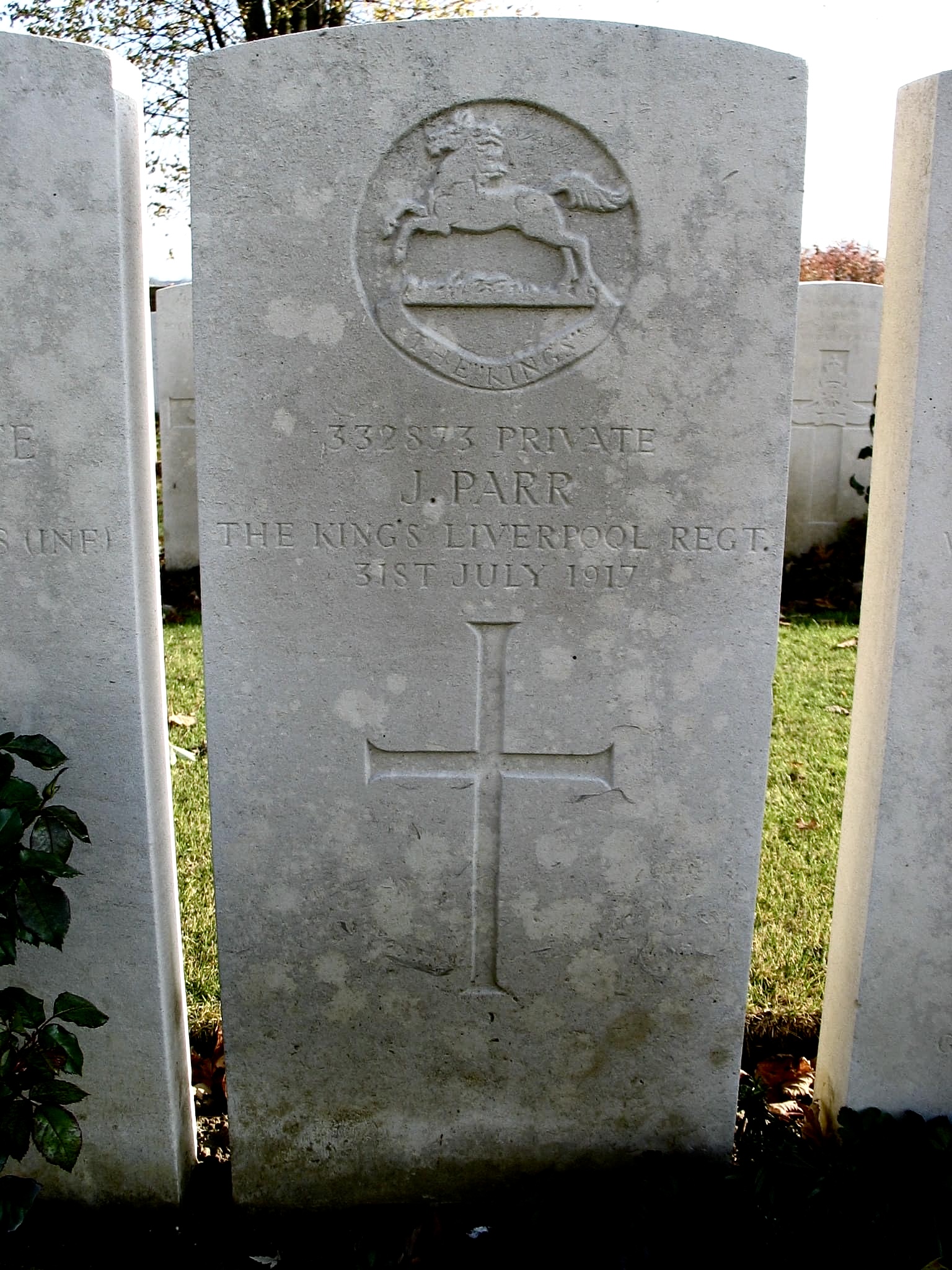
John Parr (my grandfather’s cousin) was born to Esther Parr the daughter of a Burscough Boat Man John and wife Grace. The 1891 census records him as an Agricultural Labourer in Aughton, not far from his mum and step-dad Richard Parr (Esther married a Parr and they lived in Parr’s Lane). In 1901 John is living with Esther and Richard in Aughton and still working as a farm labourer. He married Florence Gore, daughter of another Boat Man, Thomas on 11th February 1909; John’s occupation here is still farm labourer. The couple had four boys: John on 3rd October 1909; Henry on 11 June 1912; William on 6 April 1915 and Thomas on 14th November 1916.

On Thomas’s birth certificate John’s occupation is 5660, Private, 8th Irish attached to 7th King’s Liverpool a Railway Coalman. At some point John became attached to the 9th Kings and fought with them at Ypres, losing his life in action on 31st July 1917. We are so blessed to have the War Diary of his regiment and I have reproduced below the pages for his last day. How much we owe these amazing young men and all those before and since who have fought for their country and our freedom.

The King’s (Liverpool Regiment)

War Diary 31st July 1917

Battalion objective – Black Line

Forming in Oxford Trench

Battalion HQ in Cart Dugout

All dispositions were completed by 23:00H

First wave composed of C Company on left D company on the on the right with B company in rear to mop up.

B company in support and A company in reserve.

3am ten was issued and the leading wave got out of Oxford trench and lay in front of it.

Zero hour was fixed for 3:50am when 5th and 6th Kings would leave to attack and capture the German front line system and consolidate the Blue Line.

The night was quiet and the battalion had got into position without casualties.

At 3:50am the barrage started and the 5th/6th left the trenches. Our leading waves left Oxford Trench to take their position in Warwick Trench.

At 4:20am the Battalions started – it was very dark and difficult to pick up landmarks.

No news had yet come in from 5th/6th Kings

4 minutes after Zero, the enemy put a heavy barrage of HE shells on Oxford Trench – several men were hit there, a Lewis Gun team was knocked out and the reserve Lewis gun ammunition blown up. The aid post in Pagoda Street had previously been blown up and the wounded had to be dressed in the open trenches. No news came in for a long time, but numbers of German prisoners were seen coming over to our lines. At 6:30am Captain Atkinson, Lieutenant G W Harrison, Second Lieutenant Lees and A/RSW Roberts went over to establish headquarters at Jasper Farm. No news was received from the 5th, 6th or 9th until 9:30am when a runner returned from Captain Atkinson bringing messages from the front line companies and supports. Captain Richer reported that he had reached his objective but was in need of reinforcements – Captain Roberts reported that he had crossed the Steenbeke with from 6 to 10 men, another message following immediately said that he had reached Bank Farm, second lieutenant Gelderd reported that he had reached his final objective with seven men.

Headquarters then proceeded first to Uhlan Farm and then to a dugout near Jasper Farm . A message was then received that second lieutenant Ellam had reinforced second lieutenant Gelderd with fifty men and that all were consolidated. A runner reported that D company had been held up by machine guns on both flanks but the men who had been temporarily held up were reforming their company in small parties. At this time the enemy was shelling his old front line system, no mans land and as far back as Potijze very heavily with 77mm, 4.2, 5.9 and 8 inch shells in addition to high bursting shrapnel.

In the vicinity of Jasper Farm there were five tanks most of which appeared to be derelicts.

A message was received at 9:30am from second lieutenant Ebbels who, with his platoon was at Apple Villa saying that the enemy was massing on Hill 35 – at the same time the 164 brigade who were to attack the Green Line began to pass Jasper farm. A verbal message was received saying that Lieutenant Fausset had been killed and second lieutenant Barker wounded, second Lieutenant Rawcliffe was slightly wounded.

At 11:45 orders arrived from the Brigade that all available men were to be sent into the Black Line and that we were to be reinforced by two companies from the 6th Kings.

Major Hoare then went forward by Plum Farm to Bank Farm and the Pommern Redoubt to see what the situation was. At Plum Farm there were several wounded and Lieutenant Harrison established an aid post there in a concrete dugout. Bank Farm had been captured by this battalion, although it was really in the sector allotted to the 166th brigade. A German machine gunner on the roof of a concrete dugout had caused us many casualties, in carrying out the attack on the gun Lieutenant Fausset who led the party was shot through the heart.

A tank arrived at the critical moment and shot the machine gunner who had been firing his gun up to the last minute and was now lying dead on the roof of the dugout – surrounded by hundreds of empty cases. Captain Roberts had also come up against Bank Farm whereupon Second Lieutenant Gelderd seeing that the leading companies were going too far to the left attacked the Pommern Redoubt with six men, one of them being a signaller armed with a shutter. Unaided they captured around forty prisoners. Then second Lieutenant Ellam arrived with B Company and the number of prisoners was increased to about ninety – the enemy was quite demoralised and running in crowds over the crestline of Hill 35. Second Lieutenant Randall had led an attack on a party of Germans who started bombing our men on their left flank as they were digging. At Bank Farm Captain Roberts saw a party of Germans lying in a trench – he immediately rushed toward them shouting as his raised his arms above his head “hoch, hoch, hoch” – the enemy at once stood up and also putting up their hands replied “hoch, hoch, hoch” and surrendered.

During the attack on the Pommern Redoubt, Corporal James Clark discovered an enemy machine gun team trying to take their gun out of action – he immediately shot one of the gunners, put the remainder to flight and caused them to abandon their gun. At the same place Lance Corporal J Marchbank organised a bombing squad and worked his way down an enemy trench – this squad, although only seven strong took twenty prisoners. Private F Fowler also displayed great gallantry in bombing the enemy and when his supply of bombs was finished he used German bombs. Through his efforts at least a dozen prisoners were taken.

The companies were reorganised and were consolidating a line from Bank Farm to the Pommern Redoubt – this was being heavily shelled from 11am to 4pm. Company HQ were established in a dugout at Bank Farm on the roof of which was the machine gun which had caused so much trouble. This dugout had been the Headquarters of an artillery officer believed to be a Colonel who was taken prisoner by Sergeant Williams.

A number of maps and papers were taken here and sent down to the Brigade.  Battalion HQ were now established at Plum Farm. About 4pm reports began to come in that things were not going well with the 164 Brigade in front of us and that it was falling back but for some time no confirmation of this was forthcoming.

Company Commanders were warned to be ready to meet a counter attack – at this time the situation was very obscure – the day had been dark and misty and it was impossible to see anything clearly. Some distance away on the left, parties of Germans could be seen some of them apparently advancing with their hands up – what had happened on the right flank we did not know. Trenzenberg we believed to be in our hands as the enemy appeared to be shelling it. Further reports came in that the 164 brigade was falling back – small groups of men appeared to be coming back over Hill 35 but there was still no sign of general withdrawal. The battalion however was “standing to” ready to meet a counter attack. An artillery officer came in during the evening and reported that the 164 brigade had retired and the enemy were holding Hill 35 in force. An operation order arrived from the brigade indicating a general closing up on the Black Line but this involved no change in our own dispositions – it ended by saying that the Black Line was to be held at all costs – it was followed later by another order directing that the 164 brigade was to be relieved that night. All efforts were now being directed to bringing up supplies and every man at battalion HQ who could be spared was put on this job. The killing was now very violent all around Plum Farm a party of twenty had been sent up from the front line to carry up water etc in less than half an hour all but three were casualties, eight of them having been killed.

During the night the 164 brigade retired over the black line and rain fell heavily.

1st August – at day break sorties of men could be seen round two derelict tanks on the crest of Hill 35 but it was uncertain whether these were enemy or men belonging to the 164 brigade. Rain fell heavily throughout the day and the ground was in very bad condition, especially in the valley of the Steenbeke – the trenches were full of water and the sides beginning to crumble in. The men had had no rest and no shelter but they were holding on to the position cheerfully. They were however being heavily shelled.

In the afternoon most welcome supplies arrived from the transport. Headquarters rations had been lost in coming across no mans land and HQ had so far subsisted on one tin of lobster and half a loaf of mouldy German bread, discovered in Plum Farm. Shelling was very heavy in the evening and during the night. During the day Sergeant Griffiths and 15 men dug a strong point about 200 yards in advance of our front trench with a view to pushing our line toward the crest of Hill 35.

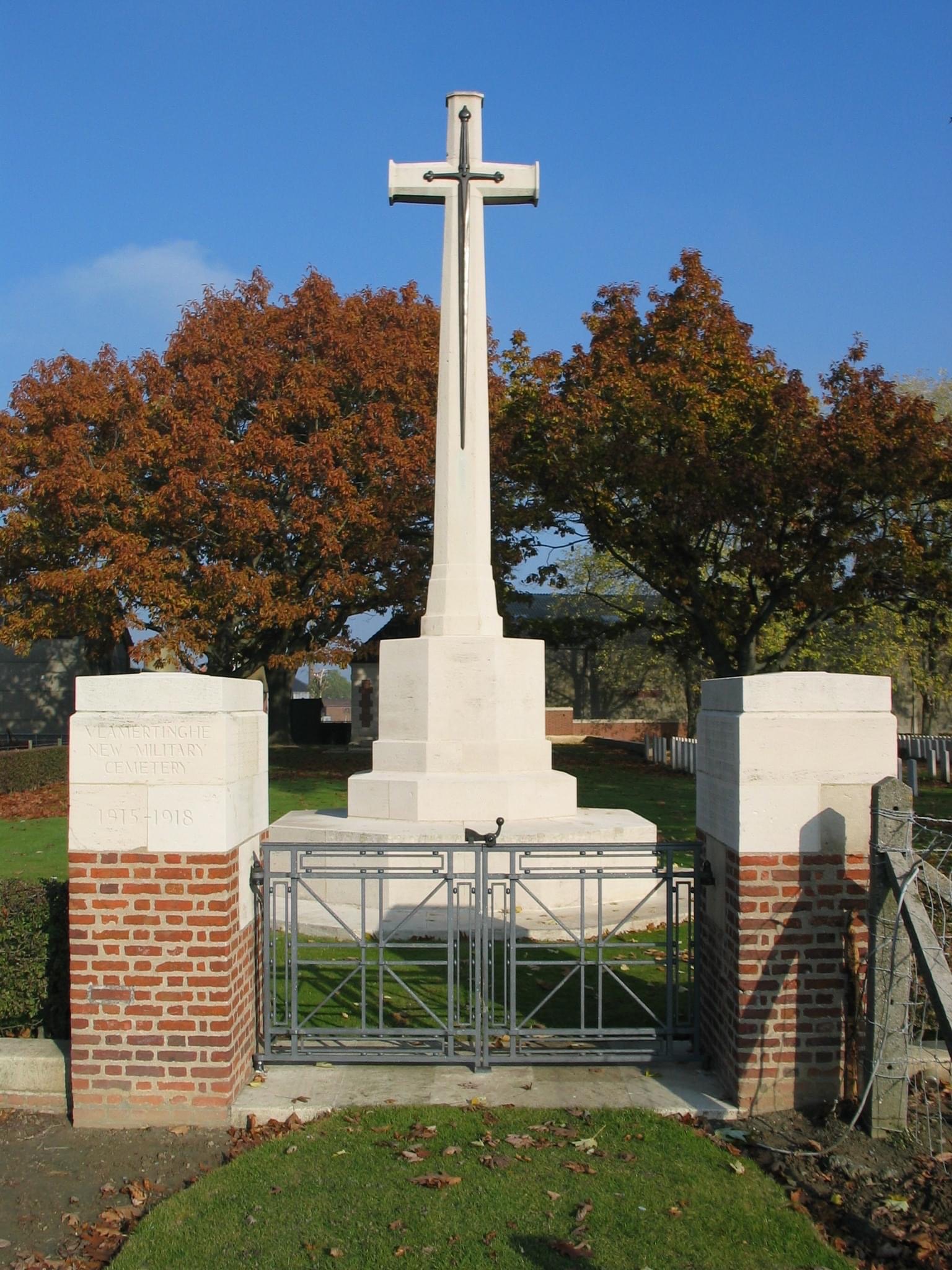
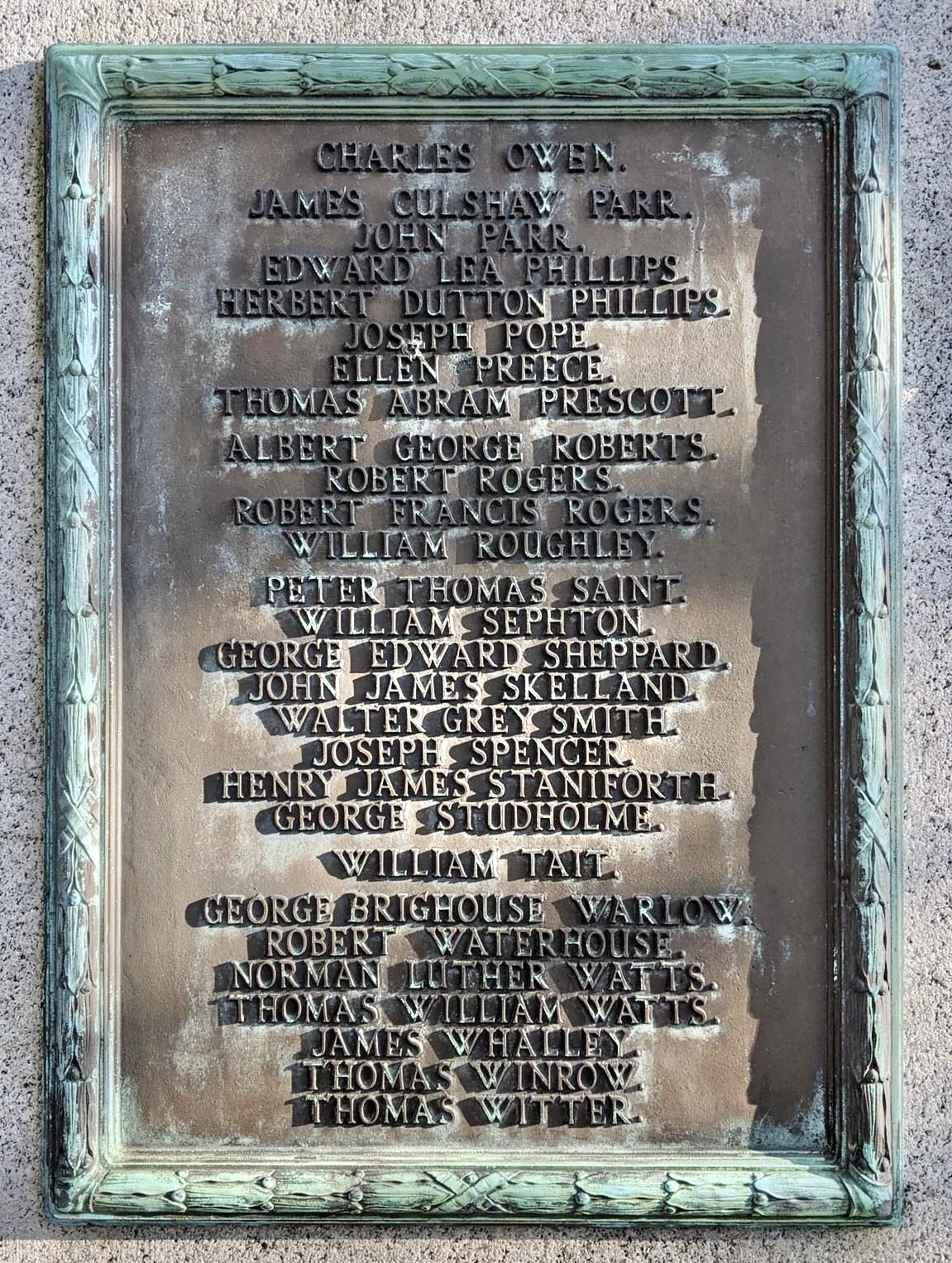
John’s sacrifice is commemorated at Vlamertinghe Cemetery and on the Aughton War Memorial

Featured

Miss Foster went to Gloucester

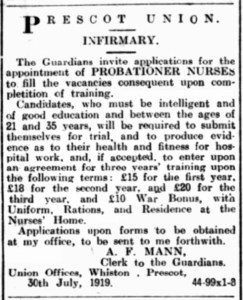
Mary Ellen Foster was born on 24 July 1893 to Joseph, a coal miner and his wife Margaret. They lived  in Rainford – a small village in the North West of England; and Mary Ellen was the sixth born of fourteen children. On the 1911 census we find 17 year old Mary Ellen in service at a farm. Five years later she enters nurse training at the Prescot Union Infirmary, the hospital associated with Prescot workhouse and the forerunner of Whiston Hospital. I imagine she had seen an advert something like the one below.

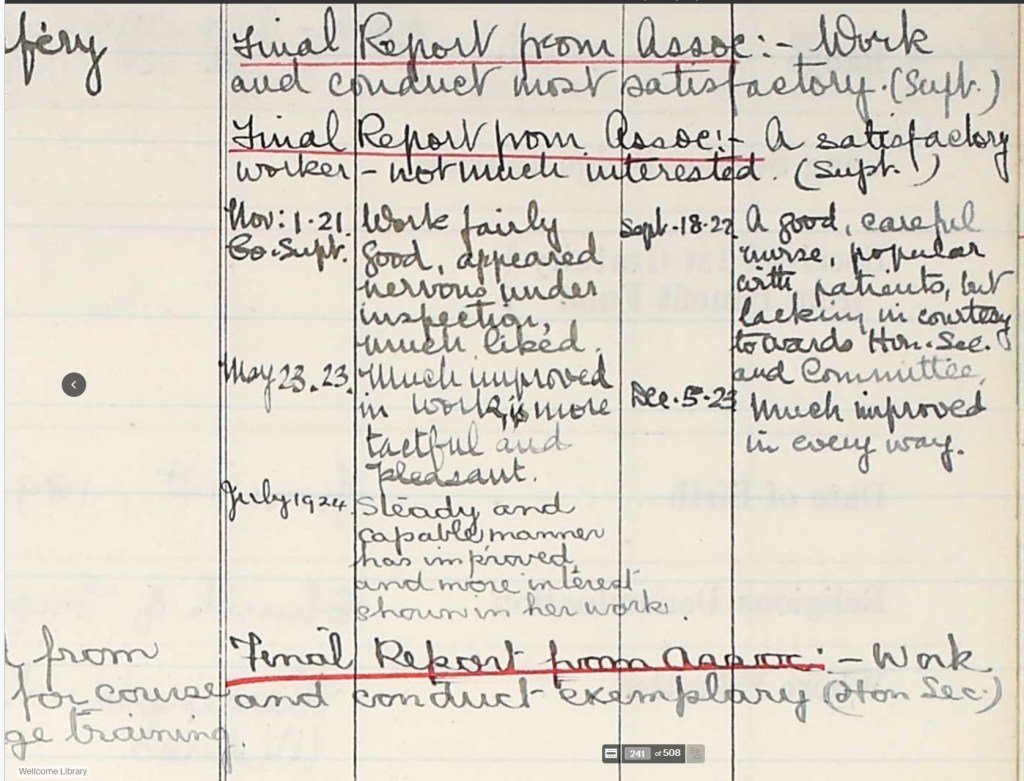
In 1920 she moved to Gloucester to commence midwifery training and later moved to London. We have the privilege of seeing her nursing register entries, reporting Mary Ellen as a hard-working nurse, popular with staff and patients. My favourite entry though is from September 1922 that reports her as “lacking in courtesy towards the honorary secretary and committee”. I am going to assume that this identifies her as being brave enough to question her superiors; a bold move for a woman from such humble beginnings.

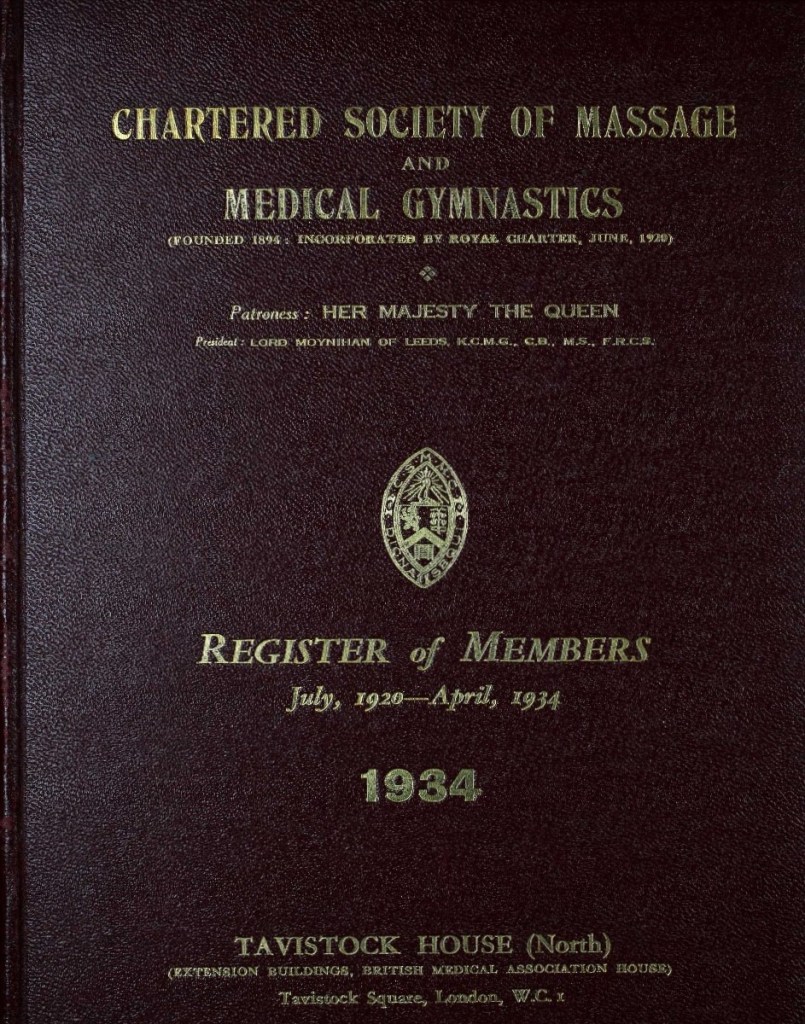
At the end of 1924 Mary Ellen leaves nursing to enter a course of massage training. This indicates her move to the Chartered Society of Massage and Medical Gymnastics, the organisation that twenty years later will become the Chartered Society of Physiotherapy.

On 3rd May 1930 Mary Ellen, 36, married John Henry Philo, her occupation detailed as Masseuse at the Orthopaedic Hospital. They marry in Stanmore so I assume the Orthopaedic Hospital is the Royal National Orthopaedic Hospital.

Over the next six years Mary Ellen and John David have three children together, all boys, David John, Harold Joseph and Paul. Sadly, in what must have been particularly difficult for Mary Ellen to bear with all her training, Harold dies at just five years of age having contracted septicaemia from a bone infection.

On 19th July 1949 John Henry died from a cerebral haemorrhage.  

As far as I can tell Mary Ellen continued to work until at least 1937, maintaining her registrations for nursing and the Chartered Society of Massage and Medical Gymnastics. She died in 1988, aged 95 from a stroke.

Say Her Name

One of the joys of exploring family history is uncovering the stories of lost souls who may not otherwise be remembered. This is one such story, that of my great great grandfather’s cousin Esther Cowley, 1847 – 1876. A short and sad life, different times, very different times. A story with so much resonance, not least that she suffered from epilepsy – a disease that has touched our lives with tragic consequences; and that during her short life she lived on the very same row of cottages where we currently live. Sadly, having lost both parents whilst very young, Esther was in the care of her aunt and uncle and became too difficult for them to manage and was admitted to an asylum for her care. I feel blessed to have been able to see the records from the asylum and whilst it has taken me days to recover from the emotional impact of reading them, I am incredibly grateful to all who were involved in preserving them and particularly to the records staff at Liverpool Library who facilitated my visit and examination of those records.

My dear Esther, I am so sorry for your suffering, and I hope that it helps in some way that I can share your story and say your name, God bless you and keep you.

Let’s start at the beginning when her mum Anne Shaw (b 13th March 1823), pregnant with Esther, married Robert Cowley (b 5th September 1823) on 15th March 1847. How much hope must they have had on that spring day, their whole lives ahead of them, their first child on the way? Two months later their daughter Esther was born on 23rd May 1847.  Seven months later, when Anne and Robert were just 24 years old, Robert died from “malignant fever” a term that described typhus. What a difficult situation for Anne to find herself in, widowed with a young baby.

On the 1851 census, just a few years later, we find Anne and Esther living with Anne’s mum (also a widow) and her family. Later that year, on 17th November, Anne marries bachelor John Lyon. A few months later Anne gives birth to twins who they name Jane (after John’s mother) and Moses (after Anne’s father). Their joy is short lived when both infants die in the December of that year. They must start 1853 hoping for better times but the year will bring more loss when Anne’s mum passes away in August that year.

On 3rd March 1855 Anne again has twins, Elizabeth (named for her mother) and Thomas (named for John’s father) but again fate strikes a cruel blow when Thomas dies the next day and even more desperately Anne dies on 13th March from typhus.  Elizabeth doesn’t fare much better when she passes away in the August, just five months old. What happens next, I am not sure but the next time we find Esther is on the 1861 census living with her mum’s sister Ellen, her husband Richard Parr and their daughter Ellen.

The next event in Esther’s short life is her admission to the asylum on 13th December 1866. It’s so difficult to imagine the circumstances and how the Parr family felt at this time. Their daughter Ellen was about to get married. They have presumably nurtured little Esther, with her epilepsy, depression and difficulties for the last five years at least, and possibly as many as eleven years. Esther is nineteen at this point and perhaps with no sign of ever being independent. Did they know what the asylum would hold in store for Esther? What alternative was there?

At this point I will let the asylum records speak for themselves, just to note her admission record states she is “dangerous”.

Admission #2643
December 13th, 1866
Esther Cowley
Female
19 years old
Single
Previous occupation – none
Previous place of abode – Bickerstaffe
Parish – Ormskirk
By whose authority – TM Ashton (Justice of the Peace)
Form of mental disorder – Imbecility & Epilepsy
Cause – unknown
Bodily condition – moderately well
Epilepsy
Congenital idiot
Imbecility from birth
Epilepsy
Facts certified “is constantly wandering about and will not speak, sleeps very little and requires
constant watching. She is violent and has struck the inmates.”
Physical symptoms “in fair bodily health & physical condition, has a goitre swelling on the right side
of her throat”
A case of imbecility, accompanied with occasional excitement, her memory is such impaired & she
talks in a childish manner, mentally incapacitated from occupying herself

Case notes (supposed to be completed once a week in the month after the initial admission and in chronic cases every three months)
DateCase NoteMy commentary
Mar 1868
(15 months after her admission)
No improvement. In fact, she seems to get more stupid. Her fits are more frequent than they were.21 years old, lost her dad as a baby, mum remarried, by the time Esther is 8 years old three of those siblings and her mum are dead, her surviving sister died a few months later. Is there any comprehension here of the grief? She has epilepsy, a misunderstood condition that some people interpret as evil, she will be confused.
Oct 1868
(7 months since last)
Remains in about the same condition. 
Sep 1869
(11 months since last)
This girl has improved slightly since she took the bromide of potassium her fits have not been so frequent neither have they been so violent in character. She is about as surly as ever & sometimes refuses her food but when shown the stomach pump she will begin to take it. Bodily condition very good.Potassium bromide discovered as an anti-epileptic by Sir Charles Locock in 1857, an obstetrician who believed that epilepsy could be caused by masturbation and was associated with menstrual periods.
Apr 1870
(7 months since last)
Remains about the same. She has had to discontinue the Potassium Bromide as it was affecting her physical condition. She is now in fair bodily condition again. Mentally if anything she is not so well.                                                                     Sir Samuel Wilkins and Sir William Gowers are credited with popularising bromide treatment and noting it does not cure epilepsy but only causes relapse of symptoms, needs titrating so dosages remain below a toxic level, and should never be abruptly discontinued.
Aug 1870
(4 months since last)
This girl is again taking the bromide and so long as she takes it in 30 gram doses her fits are kept in abeyance but return when it is discontinued, she has taken it now for some time and her system has not suffered from in this time. In other aspects the same.Now 23 years old
Dec 1872
(2 years and 2 months since last)
This girl remains in the same conditions both mentally and physically, she is still taking the pots bromide 30g and has but a few fits.25 years old
Nov 1873
(11 months since last)
Is credited with having 35 fits since last note. Is rather more feeble, still taking the bromide which has been increased to 40g26 years old
Oct 1874
(11 months since last)
Very feeble. Still has numerous fits. Taking pot bromide 40g27 years old
Feb 1876
(16 months since last)
Now taking the bromide mixture at night only. Does not seem to have had more fits (the change was made in Dec 74)29 years old, she died on 10th March and I wonder how much of this entry was reconstructed after that fact?