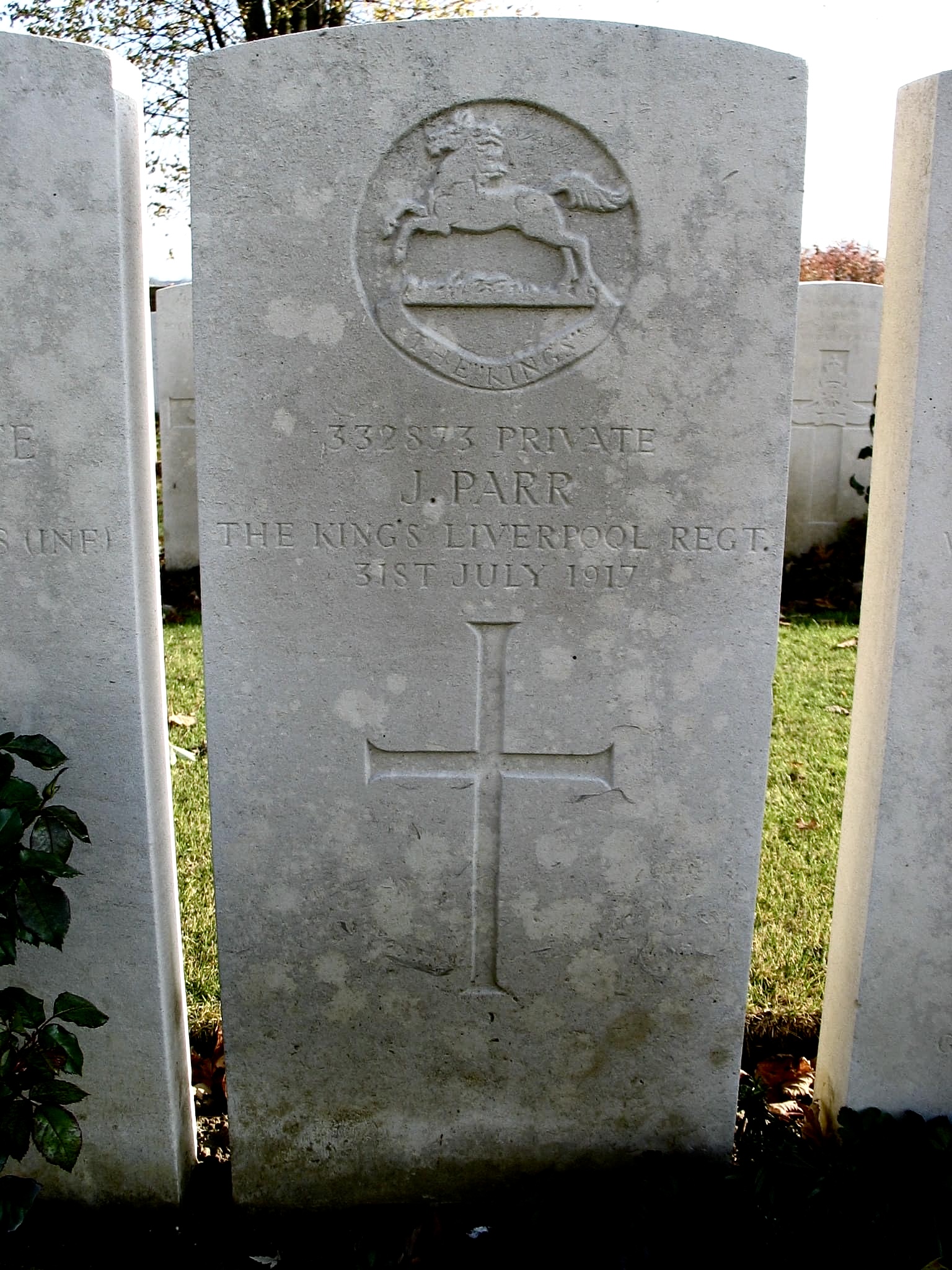


John Parr (my grandfather’s cousin) was born to Esther Parr the daughter of a Burscough Boat Man John and wife Grace. The 1891 census records him as an Agricultural Labourer in Aughton, not far from his mum and step-dad Richard Parr (Esther married a Parr and they lived in Parr’s Lane). In 1901 John is living with Esther and Richard in Aughton and still working as a farm labourer. He married Florence Gore, daughter of another Boat Man, Thomas on 11th February 1909; John’s occupation here is still farm labourer. The couple had four boys: John on 3rd October 1909; Henry on 11 June 1912; William on 6 April 1915 and Thomas on 14th November 1916.
On Thomas’s birth certificate John’s occupation is 5660, Private, 8th Irish attached to 7th King’s Liverpool a Railway Coalman. At some point John became attached to the 9th Kings and fought with them at Ypres, losing his life in action on 31st July 1917. We are so blessed to have the War Diary of his regiment and I have reproduced below the pages for his last day. How much we owe these amazing young men and all those before and since who have fought for their country and our freedom.
The King’s (Liverpool Regiment)
War Diary 31st July 1917
Battalion objective – Black Line
Forming in Oxford Trench
Battalion HQ in Cart Dugout
All dispositions were completed by 23:00H
First wave composed of C Company on left D company on the on the right with B company in rear to mop up.
B company in support and A company in reserve.
3am ten was issued and the leading wave got out of Oxford trench and lay in front of it.
Zero hour was fixed for 3:50am when 5th and 6th Kings would leave to attack and capture the German front line system and consolidate the Blue Line.
The night was quiet and the battalion had got into position without casualties.
At 3:50am the barrage started and the 5th/6th left the trenches. Our leading waves left Oxford Trench to take their position in Warwick Trench.
At 4:20am the Battalions started – it was very dark and difficult to pick up landmarks.
No news had yet come in from 5th/6th Kings
4 minutes after Zero, the enemy put a heavy barrage of HE shells on Oxford Trench – several men were hit there, a Lewis Gun team was knocked out and the reserve Lewis gun ammunition blown up. The aid post in Pagoda Street had previously been blown up and the wounded had to be dressed in the open trenches. No news came in for a long time, but numbers of German prisoners were seen coming over to our lines. At 6:30am Captain Atkinson, Lieutenant G W Harrison, Second Lieutenant Lees and A/RSW Roberts went over to establish headquarters at Jasper Farm. No news was received from the 5th, 6th or 9th until 9:30am when a runner returned from Captain Atkinson bringing messages from the front line companies and supports. Captain Richer reported that he had reached his objective but was in need of reinforcements – Captain Roberts reported that he had crossed the Steenbeke with from 6 to 10 men, another message following immediately said that he had reached Bank Farm, second lieutenant Gelderd reported that he had reached his final objective with seven men.
Headquarters then proceeded first to Uhlan Farm and then to a dugout near Jasper Farm . A message was then received that second lieutenant Ellam had reinforced second lieutenant Gelderd with fifty men and that all were consolidated. A runner reported that D company had been held up by machine guns on both flanks but the men who had been temporarily held up were reforming their company in small parties. At this time the enemy was shelling his old front line system, no mans land and as far back as Potijze very heavily with 77mm, 4.2, 5.9 and 8 inch shells in addition to high bursting shrapnel.
In the vicinity of Jasper Farm there were five tanks most of which appeared to be derelicts.
A message was received at 9:30am from second lieutenant Ebbels who, with his platoon was at Apple Villa saying that the enemy was massing on Hill 35 – at the same time the 164 brigade who were to attack the Green Line began to pass Jasper farm. A verbal message was received saying that Lieutenant Fausset had been killed and second lieutenant Barker wounded, second Lieutenant Rawcliffe was slightly wounded.
At 11:45 orders arrived from the Brigade that all available men were to be sent into the Black Line and that we were to be reinforced by two companies from the 6th Kings.
Major Hoare then went forward by Plum Farm to Bank Farm and the Pommern Redoubt to see what the situation was. At Plum Farm there were several wounded and Lieutenant Harrison established an aid post there in a concrete dugout. Bank Farm had been captured by this battalion, although it was really in the sector allotted to the 166th brigade. A German machine gunner on the roof of a concrete dugout had caused us many casualties, in carrying out the attack on the gun Lieutenant Fausset who led the party was shot through the heart.
A tank arrived at the critical moment and shot the machine gunner who had been firing his gun up to the last minute and was now lying dead on the roof of the dugout – surrounded by hundreds of empty cases. Captain Roberts had also come up against Bank Farm whereupon Second Lieutenant Gelderd seeing that the leading companies were going too far to the left attacked the Pommern Redoubt with six men, one of them being a signaller armed with a shutter. Unaided they captured around forty prisoners. Then second Lieutenant Ellam arrived with B Company and the number of prisoners was increased to about ninety – the enemy was quite demoralised and running in crowds over the crestline of Hill 35. Second Lieutenant Randall had led an attack on a party of Germans who started bombing our men on their left flank as they were digging. At Bank Farm Captain Roberts saw a party of Germans lying in a trench – he immediately rushed toward them shouting as his raised his arms above his head “hoch, hoch, hoch” – the enemy at once stood up and also putting up their hands replied “hoch, hoch, hoch” and surrendered.
During the attack on the Pommern Redoubt, Corporal James Clark discovered an enemy machine gun team trying to take their gun out of action – he immediately shot one of the gunners, put the remainder to flight and caused them to abandon their gun. At the same place Lance Corporal J Marchbank organised a bombing squad and worked his way down an enemy trench – this squad, although only seven strong took twenty prisoners. Private F Fowler also displayed great gallantry in bombing the enemy and when his supply of bombs was finished he used German bombs. Through his efforts at least a dozen prisoners were taken.
The companies were reorganised and were consolidating a line from Bank Farm to the Pommern Redoubt – this was being heavily shelled from 11am to 4pm. Company HQ were established in a dugout at Bank Farm on the roof of which was the machine gun which had caused so much trouble. This dugout had been the Headquarters of an artillery officer believed to be a Colonel who was taken prisoner by Sergeant Williams.
A number of maps and papers were taken here and sent down to the Brigade. Battalion HQ were now established at Plum Farm. About 4pm reports began to come in that things were not going well with the 164 Brigade in front of us and that it was falling back but for some time no confirmation of this was forthcoming.
Company Commanders were warned to be ready to meet a counter attack – at this time the situation was very obscure – the day had been dark and misty and it was impossible to see anything clearly. Some distance away on the left, parties of Germans could be seen some of them apparently advancing with their hands up – what had happened on the right flank we did not know. Trenzenberg we believed to be in our hands as the enemy appeared to be shelling it. Further reports came in that the 164 brigade was falling back – small groups of men appeared to be coming back over Hill 35 but there was still no sign of general withdrawal. The battalion however was “standing to” ready to meet a counter attack. An artillery officer came in during the evening and reported that the 164 brigade had retired and the enemy were holding Hill 35 in force. An operation order arrived from the brigade indicating a general closing up on the Black Line but this involved no change in our own dispositions – it ended by saying that the Black Line was to be held at all costs – it was followed later by another order directing that the 164 brigade was to be relieved that night. All efforts were now being directed to bringing up supplies and every man at battalion HQ who could be spared was put on this job. The killing was now very violent all around Plum Farm a party of twenty had been sent up from the front line to carry up water etc in less than half an hour all but three were casualties, eight of them having been killed.
During the night the 164 brigade retired over the black line and rain fell heavily.
1st August – at day break sorties of men could be seen round two derelict tanks on the crest of Hill 35 but it was uncertain whether these were enemy or men belonging to the 164 brigade. Rain fell heavily throughout the day and the ground was in very bad condition, especially in the valley of the Steenbeke – the trenches were full of water and the sides beginning to crumble in. The men had had no rest and no shelter but they were holding on to the position cheerfully. They were however being heavily shelled.
In the afternoon most welcome supplies arrived from the transport. Headquarters rations had been lost in coming across no mans land and HQ had so far subsisted on one tin of lobster and half a loaf of mouldy German bread, discovered in Plum Farm. Shelling was very heavy in the evening and during the night. During the day Sergeant Griffiths and 15 men dug a strong point about 200 yards in advance of our front trench with a view to pushing our line toward the crest of Hill 35.

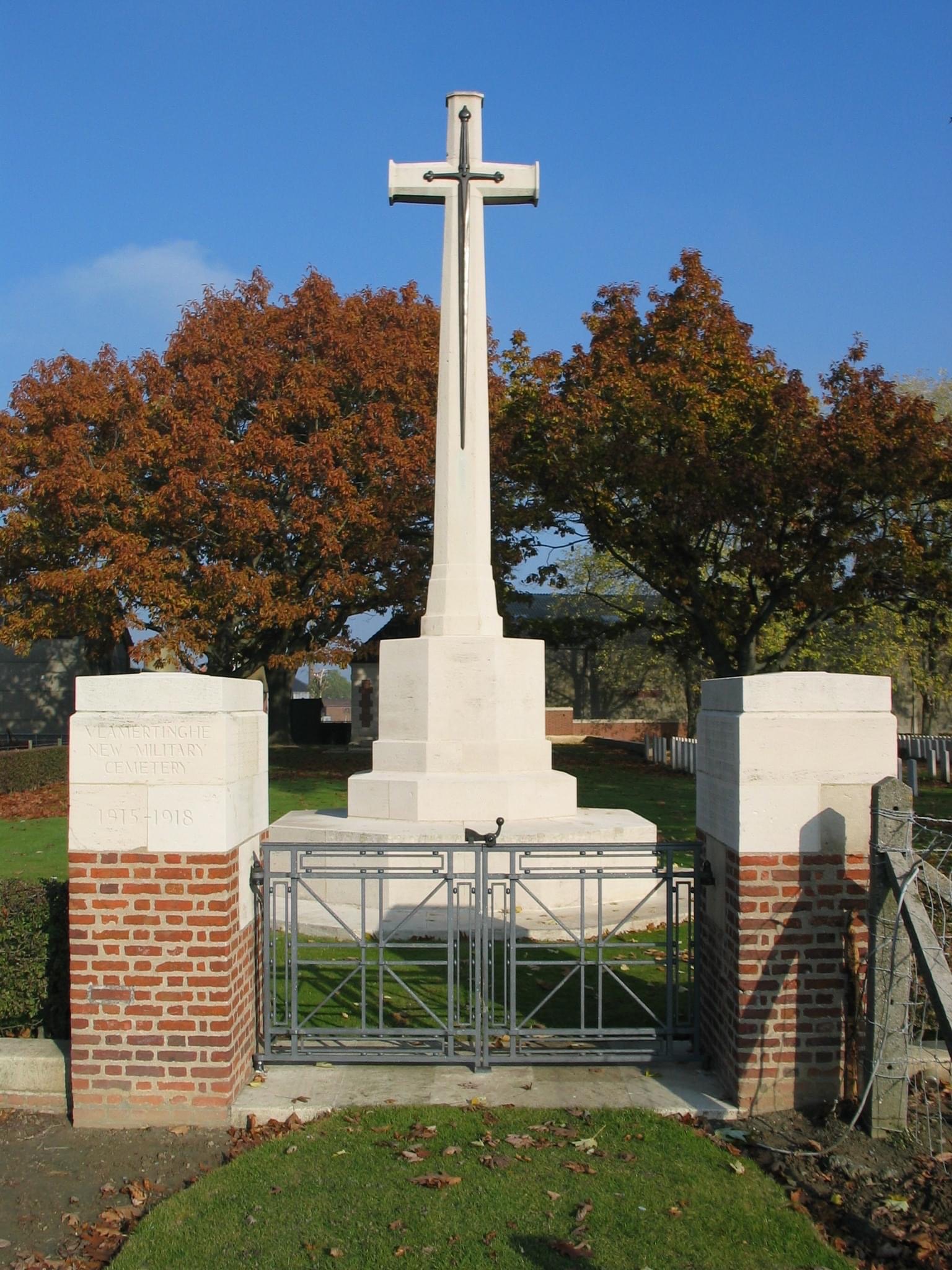
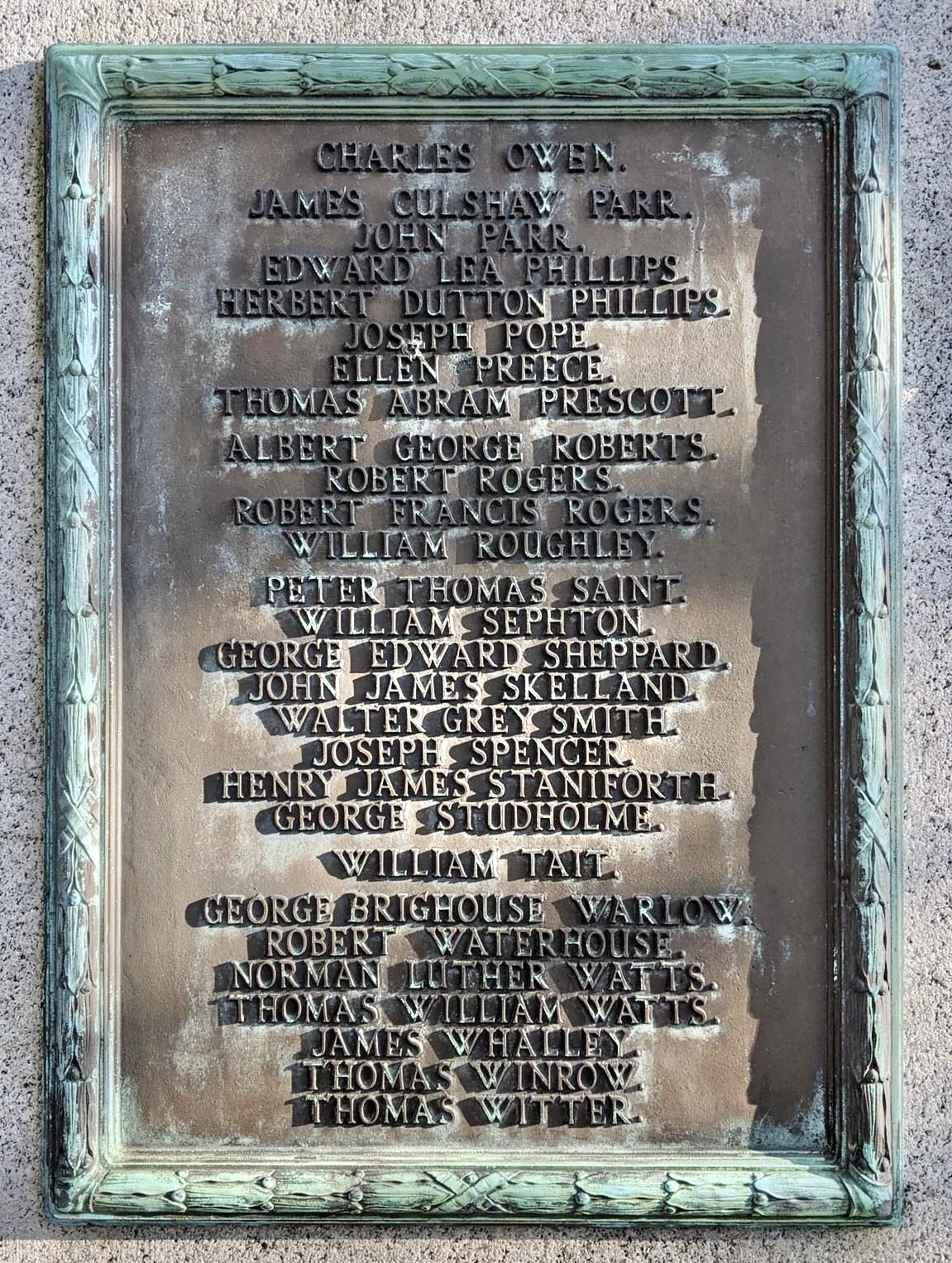
John’s sacrifice is commemorated at Vlamertinghe Cemetery and on the Aughton War Memorial